“Nights,” “evenings” or “days” describes only part of a work pattern. Ask about the actual assigned hours, rotation, training arrangements and support available during that period. Do not assume that the orientation day follows the same schedule as the regular role.
NIOSH’s nurse-focused training explains that shift work and long hours can disrupt sleep and reduce recovery time, with implications for workers and others. Its work-organization module emphasizes that organizational arrangements as well as individual strategies matter. These are occupational-health sources, not a Northwell scheduling policy or a prediction about how a particular person will adapt.
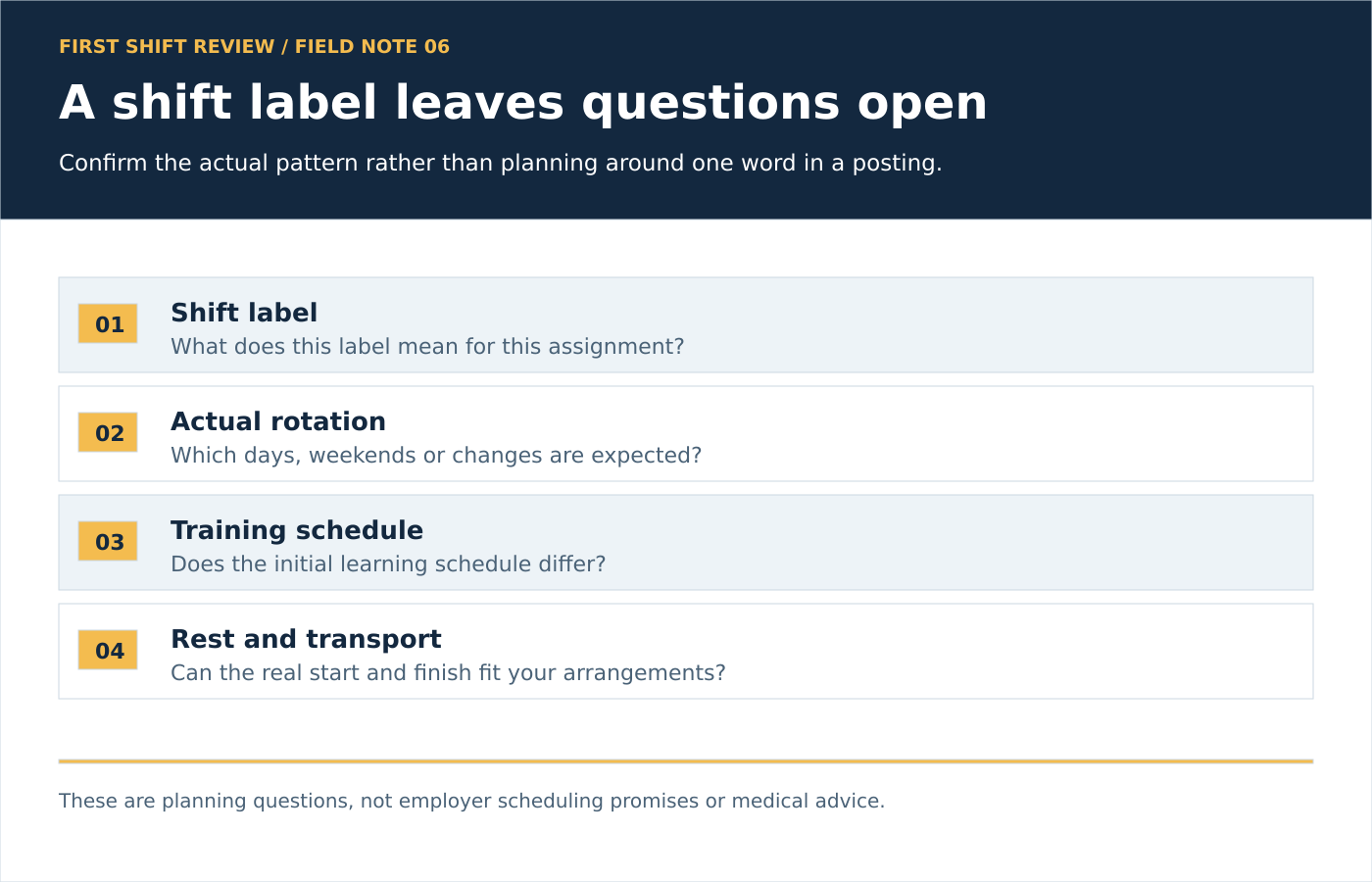
Four questions hidden inside the shift label
- What is the normal pattern? Confirm reporting and finish times, expected workdays and any rotation that belongs to the assignment.
- What is different during learning? Ask whether orientation or role training follows another schedule, where it occurs and how changes are communicated.
- Which resources are available then? Confirm the local route for supervisory, training or access questions during the actual shift.
- What practical arrangement must I make? Consider reliable transport, caring responsibilities and the opportunity for rest between commitments.
These are questions, not a statement that any particular rotation, break schedule or accommodation will be available. A recruiter may explain the posted arrangement; a local leader may need to clarify how it works in the department.
Look for a conflict, not a personal toughness test
In a fictional example, a worker expects regular overnight hours but discovers that an early training block is scheduled during the day. Their unresolved issue is not whether they are sufficiently committed. It is which dates and hours they are actually expected to attend, so they can plan transport, caregiving and rest without guessing.
If a pattern seems to create a practical or safety problem, describe the specific arrangement and ask through the relevant workplace route. Do not treat fatigue as an issue that must always be managed privately. Equally, this site cannot determine a safe individualized schedule or recommend medication, supplements or treatment for sleep.
Travel belongs in the conversation
Check whether transport operates at the actual reporting and leaving times, including weekends or holidays if relevant. A route that works for a daytime interview may not work after a different shift. Verify site-entry arrangements through the employer rather than assuming every entrance or parking option operates the same way around the clock.
This is not a commute-cost calculator. The useful outcome is a list of unresolved logistical facts that could change your ability to attend reliably. If you cannot travel safely because of fatigue, seek appropriate immediate help and follow the workplace’s process; do not rely on willpower or this article as clearance to drive.
Bring the questions back after starting
If the actual pattern differs from what you understood, ask whether the change is a one-time training arrangement or part of the ongoing role. Record the particular dates and instruction rather than making a broad assumption from the first few days. For personal health concerns about sleep or alertness, speak with a qualified clinician.